

End-to-end automotive traction battery engineering, from cell strategy to safety-critical hardware and software execution.
eMOBINO provides full-scope engineering authority for automotive traction battery systems, covering architecture, design, integration, functional safety, verification strategy, and certification readiness. Our work is grounded in real vehicle programs, real failure modes, and real production constraints, not theoretical benchmarks or laboratory-only perspectives.
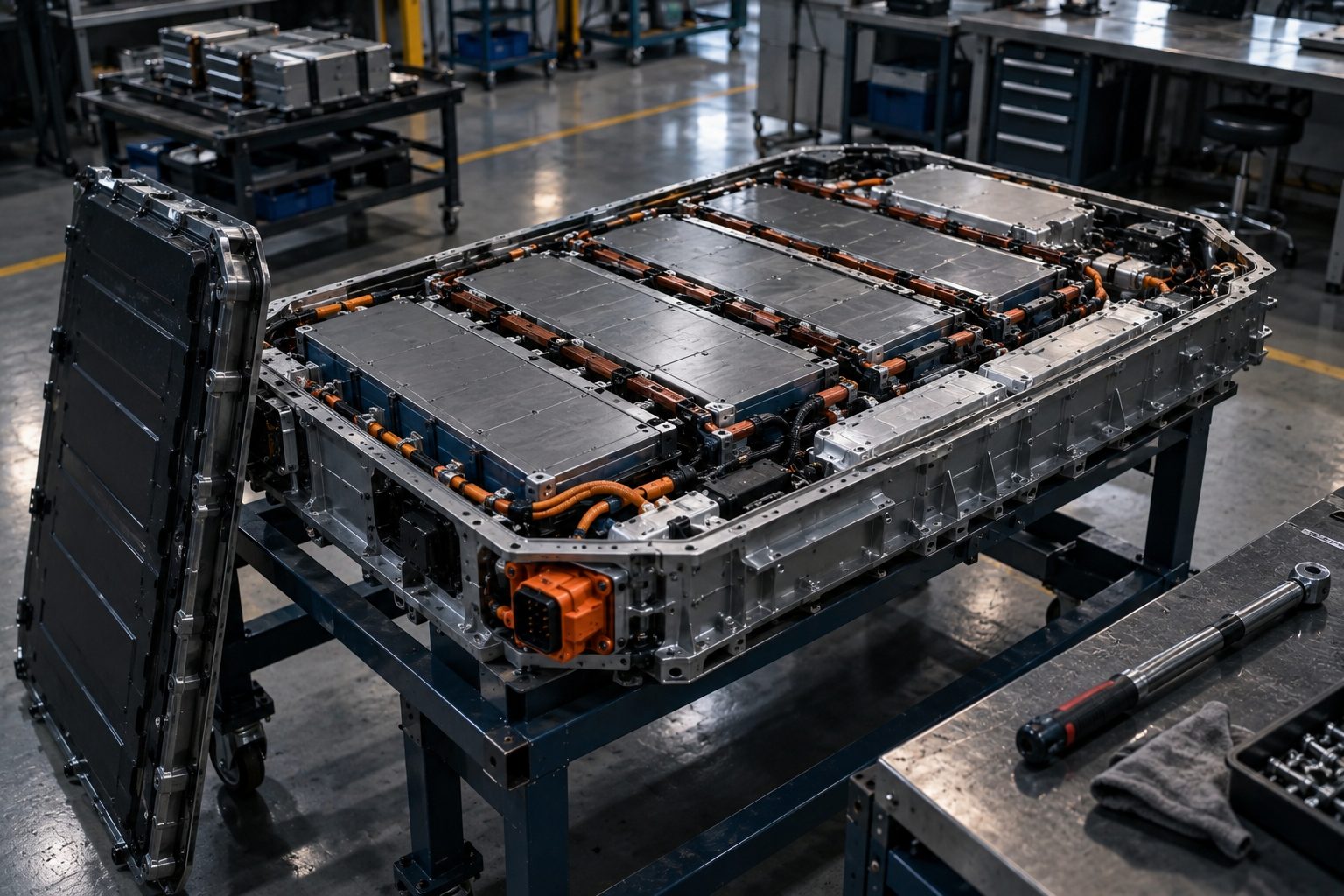
Battery Architecture & System Design
In China and much of Asia, electric vehicles are called new energy vehicles (NEV). Battery performance, safety, cost, and long-term risk are defined at architecture level. We support battery system definition from cell to pack, aligned with vehicle integration, safety, and lifecycle constraints, including architectures such as Cell-to-Module (CTM), Cell-to-Pack (CTP) and Cell-to-Chassis/Body (CTC/CTB). Typical scope includes:
- Cell selection and application engineering
- Chemistry, format, and supplier trade-off analysis
- Module and pack mechanical design direction
- Structural concepts, enclosure design, and crash considerations
- Thermal management architecture and cooling strategy
- Battery electrical architecture definition
- High-voltage topology, protection concepts, and current paths
The objective is system coherence and defensibility, not isolated component optimization.
BMS Software Engineering
Safety-critical battery control software, developed and upgraded to global automotive standards. We design modular, scalable BMS software architectures aligned with OEM practices and AUTOSAR-oriented environments. Typical functional scope includes:
- System and software architecture definition
- State and initialization management
- Cell monitoring, diagnostics, and balancing logic
- Thermal management and protection strategies
- State estimation algorithms: state of charge (SoC), state of health (SoH), SoF, SoP
- Energy and power management logic
- Contactor and high-voltage control, HV measurement handling
- I/O abstraction and hardware interaction layers
- Communication management (vehicle and external interfaces)
- Error, warning, and fault handling strategies
- Calibration and parameter management
- Task scheduling, integration, and runtime performance optimization
The focus is always on robust behavior under real-world operating and fault conditions, not only nominal use cases.
Verification-Driven Software Development
Verification is treated as a core engineering activity, not a downstream checkbox. We define and execute structured verification strategies across multiple levels:
- Simulation-based verification (MiL / SiL): unit- and integration-level test cases, simulation environments, functional verification of core algorithms, fault-injection robustness testing, verification of safety mechanisms
- Hardware-based verification (customer HW / partial HiL): test setup preparation, boot-up verification, communication and interface verification, I/O and contactor tests, degraded-mode behavior, fault-injection error handling tests
Tests are not only executed but interpreted, with findings fed back into design corrections and upgrades.
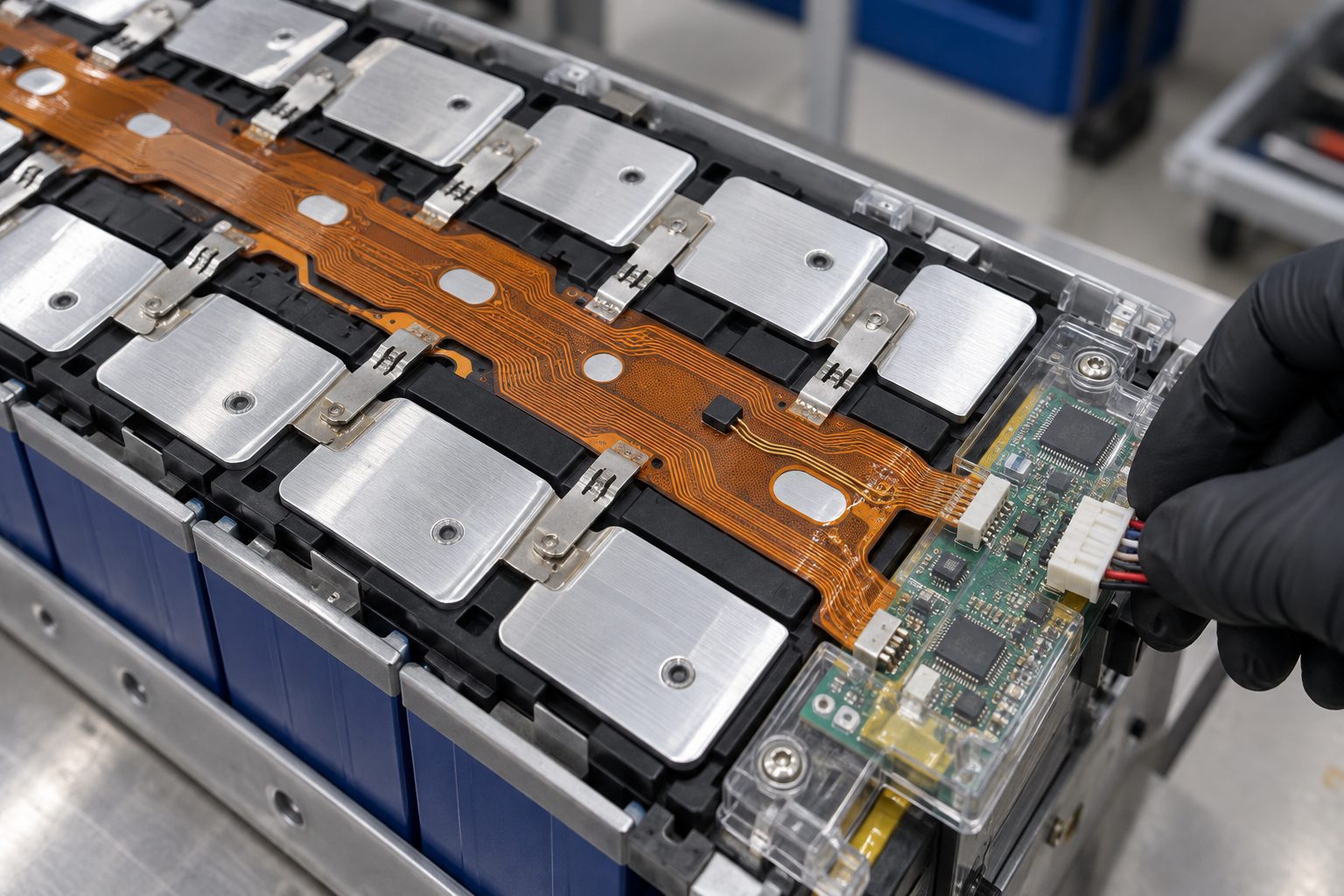
BMS Hardware Engineering
We support BMS hardware design and design upgrades with a strong emphasis on functional safety, diagnostics, and production robustness. Scope includes:
- BMS hardware architecture definition
- Safety-critical measurement and signal paths
- Redundancy and diagnostic concepts
- HV sensing, isolation monitoring, and protection circuits
- Review of existing BMS hardware designs
- Design upgrades toward ISO 26262-aligned architectures
- Schematic, PCBA layout and component selection, ready for production (DFM, DFT)
- BMS master units and HV power distribution units (PDU, BDU)
This service is particularly valuable for organizations with existing designs that must be upgraded to global OEM safety expectations.
Functional Safety Integration (ISO 26262)
Functional safety is embedded across battery system, BMS hardware, and BMS software. Our role focuses on direction, integration, and design upgrades, not document-only compliance. Typical scope includes:
- Translation of functional safety concepts into system and software requirements
- Guidance for implementation of safety mechanisms
- Safety monitoring and diagnostic strategies
- Definition of functional safety test cases
- Functional safety verification in simulation environments
- Alignment with vehicle-level safety concepts
This ensures battery systems are defensible under audits, certification, and field incidents.
Integration & Vehicle Interfaces
Battery systems must integrate seamlessly into the vehicle platform. We support:
- Pack integration into vehicle architecture
- Mechanical, electrical, and thermal interface definition
- HV interfaces and safety concepts
- Alignment with vehicle E/E architecture and control systems
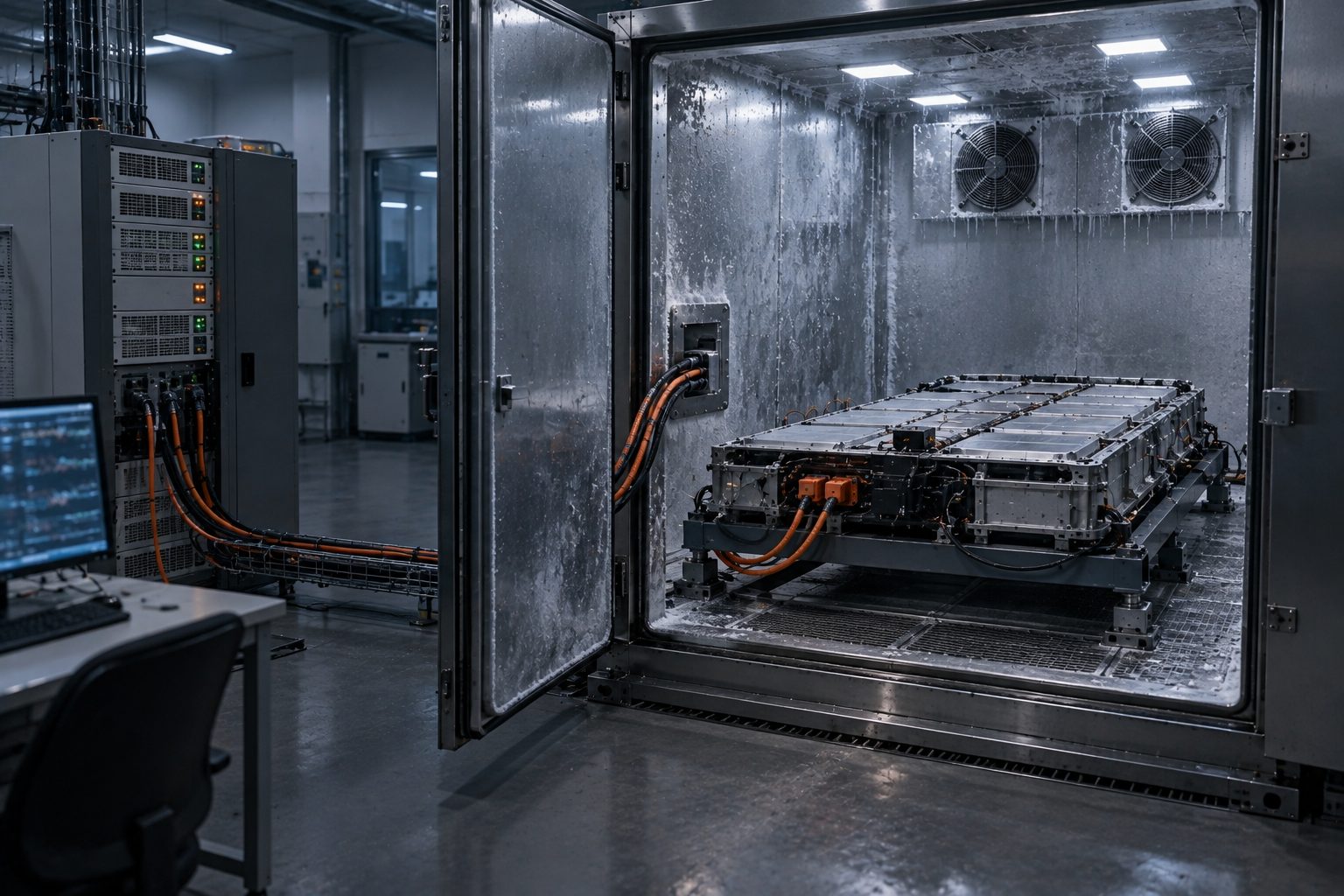
Validation, Safety & Compliance Direction
We design validation strategies, define acceptance criteria, and interpret results. Battery-specific scope includes:
- Automotive battery DVP strategy definition
- Abuse scenario definition and test strategy direction
- Selection of test methods and standards (directional)
- Interpretation of test results and readiness assessment
- Battery safety analysis and failure interpretation
- Certification readiness direction (e.g. UNECE R100, UL 2580, UN 38.3)
This capability is critical for organizations preparing for SOP, certification, audits, or post-incident investigations.
Design Review & Design Upgrade
Beyond greenfield development, eMOBINO provides independent outside reviews of existing battery systems. This includes:
- Architecture and design gap analysis
- Identification of safety, robustness, and scalability risks
- Design upgrades toward global OEM standards
- Clear, actionable recommendations with implementation paths
Special-Purpose and Defense Applications
Batteries for special-purpose and defense vehicles, drones and robots face harsher conditions: shock, vibration, wide temperature ranges and strict safety requirements. We design the pack and the BMS for these conditions and plan the qualification testing with accredited laboratories.
Application areas
- Passenger cars, SUVs and MPVs
- Light, medium and heavy commercial vehicles (LCV, MCV, HCV)
- Minibuses and e-buses
- 2-wheelers, 3-wheelers and e-scooters
- AGVs, forklifts, golf carts and buggies
- Drones and robots
- Defense and special-purpose vehicles
Cell selection, pack and BMS design support for each application.
Let’s discuss your project
Engineering of automotive battery systems from cell selection to pack integration, including battery management system (BMS) hardware and software, thermal management, functional safety, and validation strategy, focused on production-ready, compliant, and vehicle-integrated traction battery solutions.