
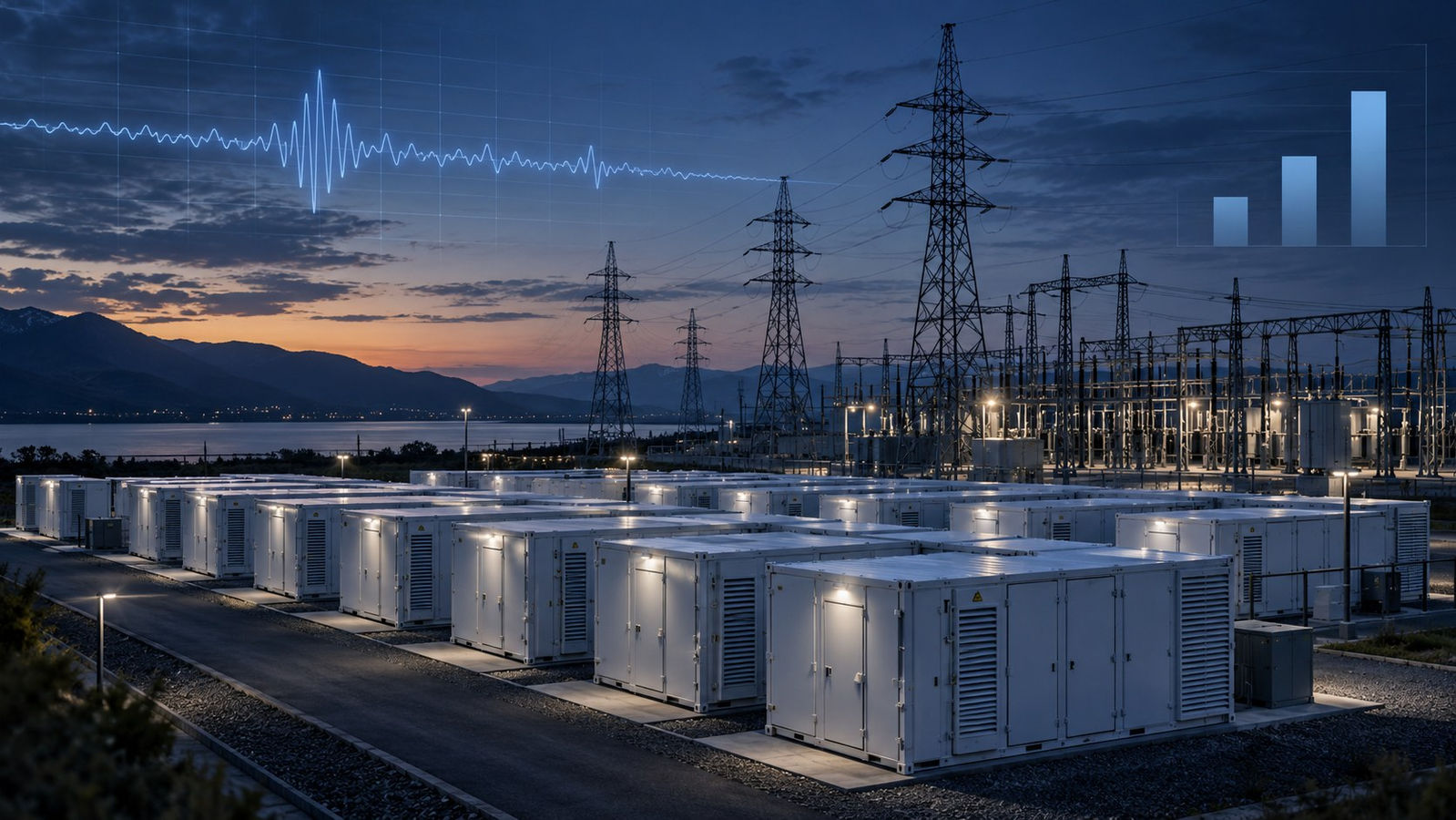
After past grid imbalance and regional blackout events, requirements such as notifying at least one hour before disconnecting were added to the regulations.
When grid stability broke down, the cost was very heavy. Frequency deviations, load imbalances and cascading protection trips caused losses that may have reached hundreds of millions of dollars. Grid security is an unquestionable priority. We have no objection to that.
The problem
When this logic was carried into the new regulation, and some foreign regulations were translated incompletely, the phrase "at least one hour" was gradually read as "only one hour" and attributed to energy storage. In other words, it was perceived as a BESS regulation. That this suited some people is another matter, and I will not go into the politics here.
In reality: the regulation says "at least one hour", and investors hear only "one hour". This small difference changes the energy storage strategy in Türkiye at its root.
The real goal is to manage energy. If the aim of energy storage is an efficient, sustainable and profitable system, a one-hour system is not the right solution in the medium to long term.
The global picture
- One-hour systems: about 10%
- Two-hour systems: about 60%
- Four-hour systems: about 30%
The market grows in favor of longer-duration systems every year.
What I hear in the field
"We built it because the regulation required it, we will not use it." This approach runs against the spirit of energy efficiency. Instead of adding value to the system, it is only for show.
The real solution
Energy storage is not just installing a BESS. It is managing energy quality, continuity and value. Low C-rate, high cycle life, stable round-trip efficiency and the right engineering determine both the return on investment and the country's energy security in the long run.
Another problem in Türkiye: lack of technical awareness
Many investment decisions are still made on unit cost alone: "Cell X is 10% cheaper than cell Y and has the same capacity, so let's take cell X."
But these questions are not asked:
- Is this cell A-grade or B-grade?
- What is the cycle life difference? (In fact, X gives 4,500 cycles and Y gives 11,000.)
- How far will DC round-trip efficiency drop after three years?
- How many GWh will be lost over ten years?
If one cell lasts 4,500 cycles and the other 11,000, the difference is not only technical, it is financial. A low-cycle-life cell that looks 10% cheaper today soon pulls total efficiency down and seriously increases the total cost over the system's life. This is just one example.
I have met the same picture again and again in investor meetings in recent months. I will keep explaining it, patiently and tirelessly.


